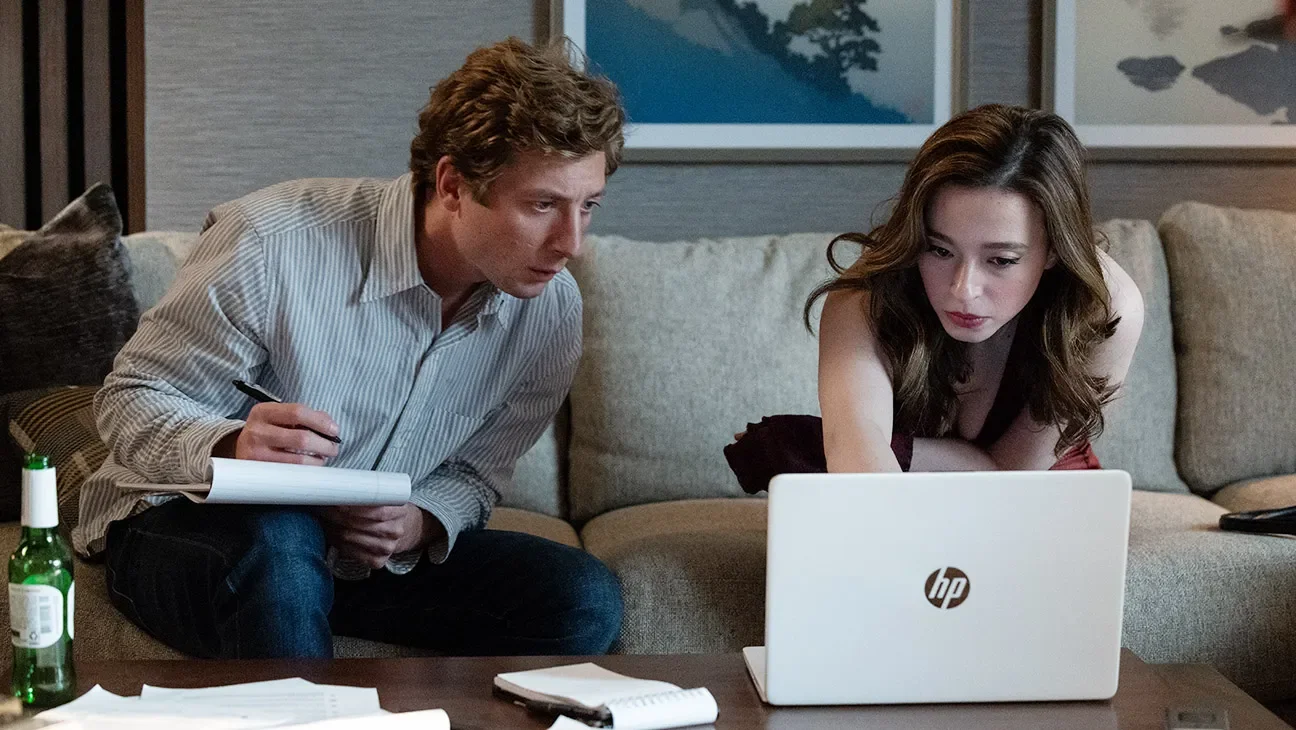
PROJECT HAIL MARY

Directing: B+
Acting: B+
Writing: B+
Cinematography: A-
Editing: B+
Special Effects: A

If you’re looking for an incredibly charming and entertaining science fiction flick, for the next several weeks your go-to choice will be Project Hail Mary, easily the best film of 2025 so far. This one ticks an incredible amount of boxes, and will work for people looking for different things. It’s going to be a kick for science nerds, assuming they don’t get too picky about accuracy—and, being a layman myself, it all seems perfectly plausible to me. Many people loved The Martian, the last film based on a best-selling Andy Weir novel, precisely because of how (mostly) scientifically accurate it was. There is no reason not to expect the same here.

It seems worth noting that I am in a somewhat peculiar position of perspective in the case of Project Hail Mary, given that I quite recently read the novel on which it’s based. I have said over and over that films should be judged on their own merits, but I possibly made a mistake by making that impossible for myself in this case. I read the novel too recently and cannot separate the two experiences, most notably in that this film, as directed by Phil Lord and Christopher Miller, and especially as adapted by writer Drew Goddard (who also adapted The Martian), is a great achievement in adaptation. But how do I know I only feel this way because I have read the novel? Would this film have been as easy to follow had I not read the novel? I’m honestly not certain—especially given that the film, even at 156 minutes in length, really felt to me like it rushed through a whole lot of the story.

Because a lot happens in this story: Ryland Grace (a perfectly cast Ryan Gosling), a middle school teacher, through a whole lot of happenstance winds up as the Science Officer on the interstellar ship The Hail Mary, sent to investigate the one sun that has not been infected by a cellular alien life form, thereby dimming its power and thus threatening the life of the planet in its orbit that otherwise supports life—in the case of humanity: Earth. All the known suns within relative proximity have been infected, except this one that is roughly 12 light years away.

Grace is part of a three-person crew sent to study this sun and see if they can figure out why it is not infected and use that information to save Earth. He wakes up from an induced coma to find his two crew mades have died, but he doesn’t remember why he’s on this ship or how he got there. His process of figuring this out lasts through several chapters in the novel, complete with flashbacks serving as memories sporadically coming back to him; in the film, this happens over just the first few scenes.

And given that Grace wakes up alone on the Hail Mary, there are not a lot of characters in Project Hail Mary. The film does have 31 credited actors, but for a huge amount of screen time, Grace is the only character seen onscreen: Gosling truly carries this film, largely on the strength of his uniquely quirky charms, mixed with his improbable good looks. Cumulatively speaking, maybe half the run time, if not more, Gosling is the only human character we see. Through maybe the second half of the film, he is one of two characters, the other being “Rocky.” If you have read the novel you know exactly who that is; if you have seen the trailer you can easily guess who that is. This whole thing would be way more fun if you just watched the movie not knowing who the hell Rocky is at all, but if that were the case, why would you even be reading this review?

Any other characters are seen in flashback, which are Grace’s memories resurfacing as part of the plot mechanics of the novel, but function more as straightforward flashbacks in the film, providing us with backstory. Sandra Hüller is also very well cast as Eva Stratt, the largely humorless but compassionate leader of the international task force created to solve Earth’s problem. Grace also enlists the aide of a security guard named Carl (Lionel Boyce) as he runs his experiments and somehow learns about “astrophage,” the star-eating cells causing the cooling and potential environmental collapse of the Earth, faster than anyone else around the globe.

So we jump back and forth between Grace getting his bearings and slowly coming out of amnesia on the Hail Mary, and the flashbacks; this is mostly how roughly the first act of the film goes. In the next act, Grace learns he is not alone, and in the final act, Grace and Rocky do a lot of collaborative problem solving. This is specifically what characterizes the vast majority of the novel: a lot of science and problem solving. Weir had also provided a ton of fascinating detail about how evolution might have worked on another planet with a totally different atmosphere, and none of this gets covered in the film—we just see the result of this evolution onscreen, and therefore really never think about it in those terms. It’s too bad, because it’s pretty enlightening stuff, and gives the film adaptation less depth than its source material. But what can you do? The plot turns in the film are astonishingly close to those of the novel, and that alone pushed the run time past two and a half hours—all of it completely absorbing and entertaining.

It’s worth noting how stunning Project Hail Mary is to look at. This is a film with a ton of visual effects, almost none of it used to showboat; it’s all integrated well and serves the story. I’m tempted to say some of the exterior shots above an alien planet during Grace’s space walks are a little too vivid, like the cinematographer got a little slaphappy with the color filters, but what do I know? I’ve never done a space walk outside a spacecraft above an alien planet.

Where Project Hail Mary strikes a perfect balance is between the science fiction leaning heavily on plausible science, and a deeply affecting story about friendship. Readers of the book adore Rocky as a character, and there’s no reason not to expect the same of viewers of the film. This is a film that would be very deserving of Oscar nominations in many of the technical categories, including Production Design, Sound, and especially Visual Effects. I don’t often pay that much attention to Original Score but Daniel Pemberton’s original score here is also wonderful.

Honestly I struggle to come up with much in the way of criticism of this movie. I suppose one thing I noticed was the implausibly wide array of changes of clothes Grace seems to have on this ship, which feel only designed to add to his personality (and Gosling has that in spades already). But this doesn’t seem worth nitpicking about; it’s a detail that will hardly get noticed by most viewers and is just part of the visual medium that is movie making. Project Hail Mary is fascinating, suspenseful, and at times even moving—everything a movie like this is meant to be. The people who made this movie understood the assignment and knocked it out of the park.

It’s everything you want and more.

Overall: A-

SLANTED

Directing: B-
Acting: B+
Writing: C
Cinematography: B
Editing: B-

Slanted has been widely referred to as “Mean Girls meets The Substance.” There is some accuracy to those comparisons, except that Slanted lacks the gonzo savagery of The Substance. And I really want to say it lacks the wit of Mean Girls, except that at the time I even thought Mean Girls was rather overrated, a warmed-over Heathers, which had far greater satyrical bite. This is precisely what Slanted is missing: satyrical bite.

I really wanted Slanted to go harder. A story about a high school girl who undergoes cosmetic—some say “trans-racial”—surgery to become White is some fertile ground for the kind of satire it’s going for. But Slanted is less biting satire, and a little more lower-rung Black Mirror. It does a pretty good job of reflecting the social and racial structure of America, but doesn’t go very deep into it. This kind of movie only really works if it makes you go deep. A bunch of White kids salting otherwise unadorned salads for lunch in synchronized movements isn’t really going to cut it.

There’s a very strange irony to this production as well. Writer-director Amy Wang is herself of Chinese descent, which bodes well for a movie about a Chinese-American family. She casts actors of Chinese descent to play characters of Chinese descent, particularly Shirley Chen, who plays the protagonist, Joan Huang, for the first third or so of the movie; also Joan’s parents, Sofia (Vivian Wu) and Roger (Fang Du). But these are the only characters—or actors—of Asian descent in the entire production, and once the surgery takes place, Joan renames herself “Jo Hunt” and is played for the rest of the movie by Mckenna Grace. The irony is that this is a film about the denial of racial and ethnic identity, made by a woman of Chinese descent, but the vast majority of the actors given work to play parts in the cast are pointedly conventionally—maybe even blandly—attractive White people. You know, the very people afforded the greatest opportunities in this society.

It even seems worth mentioning that Amy Wang is Asian-Australian—not, it must be noted, American. To be sure, there are other international directors out there with an astonishing ability to reflect deeply authentic, American characterizations. But Ang Lee, Amy Wang is not. Much of Slanted takes place in a high school environment that feels like a critique of what an outsider might thing American high school is like, based on countless other American movies they’ve seen. The “Mean Girls” vibe among the popular girls Joan/Jo is desperate to become friends with feel very contrived.

It’s the writing I have the biggest issue with in Slanted, which doesn’t even manage to be consistent. Joan is using an app to create White-faced filters on her phone called Ethnos, which clocks her heavy usage and then offers her a discount on their cosmetic services. Ethnos declares that they cannot do the full surgery without a parental signature due to her being a minor, but they’re perfectly happy to do a hair transplant without it—complete with masking her with gas to put her to sleep. We then see bloody spots where they begin pulling her black hair out. None of this requires parental consent?

I’m fully aware that Slanted is meant to be a fantasy world of subtle horrors, not something to be particularly concerned with realism. After all, when Jo’s face skin starts to droop, a significant plot point in the latter half of the film, Ethnos simply provides her with a cream and some tape. We see hands go to her face without the camera actually showing her face, and suddenly she looks normal again. The sticking point for me is that the parental consent is used only as a plot point in the process of Joan losing her parents’ trust; it otherwise has no point in the plot, if this guy’s going to do a hair transplant on a minor without parental consent anyway.

Where I really must give Wang her due is that the performances in Slanted are actually kind of astonishing. Shirley Chen is serviceable as Joan; it’s when Chen is replaced by Mckenna Grace that the cast truly impresses. Grace performs most of her role in English but does occasionally speak in Mandarin, and quite believably (not that I would have any idea how good or bad her accent is, mind you). Most significantly, even after Joan is no longer shown onscreen, but the character comes home and takes some time to convince Sofia and Roger that she’s actually their daughter, they’re still completely believable as a family. You never stop accepting that Jo is their daughter, even after she’s transformed into a White girl. This is a true testament to the performances of all three of them.

There is a bit of a plot twist that comes along that you can see easily see coming, but the performers involved, particularly Amelie Zilber as Olivia Hammond, the most popular girl in the school, also perform it well. Joan’s best friend, Brindha, is played by Maitreyi Ramakrishnan, from the Netflix series Never Have I Ever, and seems to exist simply to be a fellow Asian character who is not a member of Joan’s family. There is so much potential for a film like this to explore that it does not bother with, most significantly the intersection between White racism and the anti-Blackness of other races. Brindha is a young Brown woman who comes closest to representing the experience of anyone outside the Huang family who is also not White; the only Black people we see in this movie are extras used at the Ethnos clinic, and in one pivotal scene, a nameless and silent Black friend of Brindha’s who Jo is peer pressured into disinviting from a party. This feels like the very essence of Black tokenism.

If Slanted had any real curiosity about the diversity of American experience, even among insecure, White-supremacy-pilled people of all races and ethnicities, it might be easier to like. It’s perfectly fair to tell a story like this from the singular perspective of an Asian-American family, but then it brings in characters of other races and does them a narrative disservice. To be fair, Slanted still has its moments; I certainly got a good laugh out of Ethnos announcing new locations in “Richmond, Virginia; Pittsburgh, and Spokane.” If it spent a lot more time with pointed jabs like that and less time with a misguided undertone of melancholy and barely a hint of the “body horror” it seemed to promise, Slanted would have worked a lot better.

I see White people: this misguided irony of Slanted.

Overall: B-

SIRĀT

Directing: B
Acting: B-
Writing: B
Cinematography: A
Editing: B+

As I consider Sirât, the Spanish nominee for Best International Feature, I keep thinking of the 2021 film from Mexico, New Order, which was so deeply nihilistic it left me baffled, bordering on angry. There is no question that Sirât is a better film, and yet I am not convinced there was any more of a point to it. Sirât is far more subtle with themes that New Order beat us over the head with, but I still could not in good conscience recommend it to anybody.

Some truly horrible things happen in Sirât. I went in already knowing the first horrible thing that happens; I just did not know exactly when or how it would occur. I can’t say knowing about it ahead of time made it any less horrible to witness, this scene alone left me deeply rattled, mostly because it comes out of nowhere during what is otherwise a perfectly normal scenario: people working together to change the tire on a traveling bus on fairly treacherous Moroccan desert mountain roads. What I was not prepared for was how things sort of settle a bit after that, only for things to get even worse.

This is a film clearly working in broad, existential and spiritual metaphor, even though on the surface everything is very grounded in reality. It is explained to us in an opening title card that Sirât refers to the Islamic theological idea of a bridge one must cross, “thinner than a hair and sharper than a sword,” over hell and into Paradise. The faithful will cross successfully and the sinful will descend into hell. Now, I know next to nothing about Islamic belief, so it’s not only conceivable but likely that my Western mind lacks a certain understanding of nuance here. (Although, side note: after reading a few other reactions to this film, it’s clear there are people from the region who feel director and co-writer Oliver Laxe is dabbling with real-life geopolitcal tensions he has no business playing with.)

All I know is, not only do the characters in Sirât have horrible things happen to them, but they happen at random and without any directed malice. These are all perfectly decent people, basically minding their own business and helping others in whatever ways they can, and tragedy befalls them out of nowhere. The only pattern to be found is the quick succession of sudden horrors befalling this one group of people.

I’m not eager to tell anyone else to sit through this movie, which I found compelling until I found it by turns horrifying and deeply stressful, but I still won’t spoil specifics. I’ll just say that it begins with Luis (Sergi López), a middle-aged man, and his son, Esteban (Bruno Núñez Arjona), milling about a desert rave in Morocco, handing out flyers and looking for Luis’s older child, Esteban’s sister. We never do find out how long she’s been missing (except that it’s been a long time) or why she’s apparently lost; these two only know that she frequents these desert raves.

The rave music figures prominently in the plot of Sirât. I haven’t been to a rave since college, so my impression of them is that they occur overnight in dark lofts or basements, packed with young people on relatively harmless drugs and surrendering to the beats. This was roughly thirty years ago, so clearly I don’t know what the fuck is going on now; a quick Google search indicates there is indeed a thriving desert rave scene in Morocco. It would seem these are still typically overnight affairs, but all of those seen in Sirât appear to be happening midday. This is the case during the opening credits identifying the principal characters other than Luis or Esteban, nonprofessional actors found for director Oliver Laxe and given the same character names as their real first names. After this, we don’t actually see the title, Sirât, until 30 minutes in.

By that point, Luis and Esteban, still desperate to find their lost family member, follow a small caravan of vehicles on their way to another rave after military has come and forced a rave to break up. We’ve already gotten very sporadic snippets on car radios about nations in the region descending into armed conflict, and it’s serious enough for citizens of the EU to be singled out for evacuation. The smaller group of ravers that Luis follows in his car have little interest in it, aside from a passing reference to “World War III” that doesn’t seem to be taking it very seriously, even though some of them appear to be seriously injured veterans themselves: one with a missing leg who walks on what looks like a repurposed crutch; another with a missing hand. There is another passing reference to them being “deserters” but with no further detail or contextualization.

I am reminded yet again of that other film, New Order, in which the narrative takes us into the thick of the violent chaos—in that case a senselessly violent overthrow of the elite by the underclass. In Sirât, we have a group of people who have deliberately separated themselves from the violent chaos, escaping into drugs and beats but otherwise pretty pacifistic. And unsettlingly terrible things happen to them anyway. And in the most straightforward sense, there is no rhyme or reason to it.

So this is where the intended takeaway is up for debate, I suppose. The final sequence in Sirât was so tense I could hardly handle it. They cross a lethally dangerous path, which some cross unscathed and others do not; presumably there is profound importance to the line, “I just crossed without thinking.” This is his response to how he made it work, while another did not succeed.

And in the end, this is all we know about any of these people: only that some of them have dedicated their lives to raves, and that Luis is looking for his daughter. We don’t hear anything about Esteban’s mother, or about any of the ravers’ lives up to this point, at least not beyond a vague reference to desertion. Earlier in the film, one of the ravers turns off the radio announcer detailing what’s going on in the country, presumably because all they want to do is shut out the realities of the wider world. Beyond that, Sirât simply follows a small group of people who either meet violent ends or barely miss violent ends. The image of the first incident is so simple in its horror, something we hear rather than see directly, is something I will not soon shake, even though it is only the shock of characters witnessing it that plays out onscreen.

There’s something doubly effective about the choice to use nonprofessional actors for this. Esteban in particular feels like just a regular, unremarkable kid who is naturally very well loved by his decent dad. Horrible shit can happen to any of us at any time. And yet, in the end I was still left with the question: okay, but why? It seems the absence of an answer to that question was the point of this movie, except the characters have no choice in the matter, but we do. My experience of Sirât was one of tension and stress that could have been avoided; watching this film was not a random thing that happened to me out of nowhere. Not putting yourself through it is also a choice you can make, and in spite of a lot of it being very well done—including a good amount of genuinely gorgeous cinematography—that’s the choice I would encourage.

Let’s all form a circle and talk about my deep ambivalence about this movie.

Overall: B

HOPPERS

Directing: C
Acting: B
Writing: C-
Cinematography: B
Editing: C
Animation: B+

Has it finally happened? Have I become a contrarian crank? The old man who just doesn’t get it, who says Pixar movies were so much better back in my day? They just don’t make Pixar movies like they used to anymore! This is objectively true, actually, but does that matter to younger audiences? It’s certainly not going to matter to children, who will be perfectly entertained by Hoppers while I found it dumb as hell.

It’s a common refrain for me now, to say that Pixar once reliably made films that worked just as well for grownups as they did for children. They had a sophisticated sense of humor that made them stand apart from other animation studios. Those days began to end roughly a decade ago. Now the people at Pixar keep themselves afloat by riding their own coattails with endless sequels, interspersed with overstuffed nonsense like this.

I am reminded of The Wild Robot—a far superior film—and my one real complaint about it: that it depicts a wild animal world in which predators and prey become friends for the greater good. The same thing happens in Hoppers, they just don’t even do that as well. And Hoppers is a wildly derivative work of cinema. Its premise is so similar to that of Avatar, in fact, that the main character, Mabel (Piper Curda), literally says “This is like Avatar!” Mabel’s college professor mentor, Dr. Sam (Kathy Najimy), immediately retorts, “It’s not like Avatar!” but the cat’s out of the bag.

Or the beaver is, I suppose. Because, for reasons that are never made clear (who cares, it’s a cartoon), Dr. Sam and her helpers are doing research on porting their brains into robot animals as a means of communicating with them in their own language—which is somehow the same among all species of animals except human. Mabel, who is desperately trying to save the forest glade where she grew up with her late grandmother in an early sequence reminiscent of (but nowhere near as good as) the growing-old montage at the beginning of Up. The mayor of the nearby city of Beaverton (Jon Hamm) has selfishly dislocated all the animals there in an attempt to make way for a freeway bypass that will save commuters four minutes. Seizing an opportunity, Mabel ports herself into the body of a robot beaver, and then unwittingly ignites an animal uprising against humans.

To call the plot of Hoppers convoluted would be an understatement, and I haven’t even yet mentioned that the animals basically split into different factions, one who take the idea overboard and declare all humans need to be “squished,” and one that understands that’s a little much. Will children even be able to follow this? Probably not. Will they be delighted by a lot of the cute and funny animals? Definitely yes. Will Hoppers enter the echelon of classic Pixar animated feature films, like the original Toy Story or Finding Nemo or The Incredibles or WALL-E? Not likely. This movie will be forgettable to children and grownups alike.

I keep thinking about the 2022 film Lightyear, the first Pixar film I rated as low as a C+. And here we are again. The difference was that was an extension of an already-existing franchise, one that already had four previous installments (the fourth one being the weakest of the bunch—and yet, I’ll come back for #5). Hoppers is easily the most disappointed I have ever been in a wholly original Pixar film. It’s way too busy. It’s overstuffed. It’s convoluted. I don’t get it.

And this is a case where I am in the minority. At least in the case of Lightyear the response was definitively mixed. Hoppers is getting a pretty positive response, and I can only theorize that I am perhaps too whetted to what Pixar once was. Would I feel the same way about Hoppers if all else were the same but it were made by a different animation studio? I think I would, actually.

A lot of Disney properties stand the test of time, and Hoppers will not be one of them. You want to see a movie that examines relationships of substance using wildlife characters? Watch Bambi—which is not even my favorite Disney film, but I can recognize an enduring classic, complete with innovative animation techniques, when I see one. The makers of Hoppers are entertaining us, sure—I got a few good laughs—but they’re phoning it in. Why bother casting the likes of Meryl Streep as a megalomaniacal Insect Queen if you’re not even going to register that it’s her?

Setting all of that side, some wild shit happens in this movie. I probably shouldn’t spoil what happens with a flock of birds and a giant shark voiced by Vanessa Bayer, except to say that it’s ridiculous even by this movie’s standards. Director and co-writer Daniel Chong woke up one day and chose chaos. I was actually kind of locked in with Hoppers in the beginning, even though Mabel as a little girl is far more compelling than Mabel as a 19-year-old college student. I even leaned forward when Mabel found herself following a mysterious beaver into a science and technology lab. But then Mabel ports into a robot beaver, infiltrates a weirdly homogenous animal society, and winds up at a giant mound atop of which is King George the Mammal King beaver (Bobby Moynihan), to whom animals of all other species is bowing, and I’m just thinking, What the fuck is this? I haven’t even mentioned the brown bear (Melissa Villaseñor) who, much like in The Wild Robot, is for some reason everybody’s friend. She does eat a perfectly friendly fish at one point, so, points for that I guess.

I long for the days when Pixar made films that were both wildly entertaining and featured narratives of nuanced substance. In Hoppers, it feels like the relentlessly chaotic action exists to distract us from the fact that it’s all just empty calories for the mind. We might as well be plugging these looney antics right into our eye sockets, entertainment as overstimulating pacification. I want to say that Pixar is still capable of greatness, but it’s been a good five years since they last made something truly great; four since they squandered potential by dumping really good material direct to streaming. But I still believe in you, Pixar! I’m just waiting for you to climb to the top again, because this isn’t it.

Don’t ask.

Overall: C+

THE BRIDE!

Directing: B
Acting: A-
Writing: C
Cinematography: B+
Editing: C-

Let’s start with the good stuff. If there is any reason to see The Bride!, it’s Jessie Buckley. She tends to be the biggest reason to see anything she’s in, really; even in subpar material, she elevates it by her mere presence. This is deeply the case here, where she plays effectively three different characters: a rambunctious 1930s Chicago woman named Ida; the reanimated “The Bride” who has no memory of the time before her death; and . . . Mary Shelley.

And this leads us right into how The Bride! is a thematic mess, and pretty much always lacks narrative clarity. It would seem that Mary Shelley is writing this version of The Bride of Frankenstein herself, by possessing Ida before her death, as well as possessing The Bride after being reanimated, in so doing just confusing Ida. To some people this makes sense. To me, it does not.

And yet, there remains a lot to delight in The Bride!, mostly in the casting. Buckley is an extraordinary talent, and it’s worth noting that Ida is American and Mary Shelley is English, and Buckley regularly switches between the two accents with what appears to be effortless ease. (It’s also worth noting that Jessie Buckley herself is an Irish woman with an aptitude for accent work worthy of Meryl Streep; we rarely see her in her native accent, and none of the accents she uses here are her own.) We have a comparable talent in film veteran Annette Bening, who here plays a new version of “mad scientist” Dr. Euphronious. Notwithstanding the prosthetic teeth that border on distracting, I found myself wishing I could see a movie about that character—and it’s always great to see two actresses of this caliber together.

Then there’s “Frank,” as played by Christian Bale, another actor widely considered to be among the best of his generation. He does everything he is asked to do here, and he does it well. This is a world—much like Guillermo del Toro’s Frankenstein—in which Frankenstein’s monster has gone on living a very, very long time, in this case through the 1930s, and is apparently a known entity. Bale’s monster has simply taken on his maker’s name, perhaps a subtle nod to how often people confuse the two characters. (There’s also a unsubtle nod to the mispronunciation of “Frankenstein” from Young Frankenstein.) Frank has tracked down Dr. Euphronious due to her extensive research, to convince her to create a Bride for him out of a woman’s corpse.

I suppose we’re meant to think Ida’s corpse is found randomly; lucky for Frank, she’s beautiful—”too beautiful,” indeed, he says at first. The Bride! has a lot of feminist overtones, many of them so on the nose they might as well be punching you in the face, including repeatedly shouting the phrase “Me too!” If you really want to look upon The Bride! with a feminist eye, however, I would argue that it fails. Through most of the movie, Ida/The Bride either has no agency, or the film makes her agency very unclear. She’s either pushed around by men, or manipulated by the real-life author who’s ostensibly possessing her. And once we are clearly meant to understand she is taking command of her own agency, and she insists on giving herself a name, the name she chooses is “The Bride”—a generic phrase that exists to connect a woman to a man. Granted, in so doing she’s declaring her independence from Frank, except this makes it unclear exactly to whom she is supposed to be betrothed or married. Is this meant to be irony? I can’t tell. It further muddies the narrative when she cannot tear herself away from Frank even after this occurs.

Maggie Gyllenhaal is credited as both the director and writer of The Bride!; I find her very impressive as a director, less so as a writer (though I did like both elements of her work better in The Lost Daughter). I’d rather like to see what she could achieve as the director of someone else’s writing—and I suspect The Bride! could have benefited significantly from either a completely different writer, or at the very least a collaborator. Then again, there’s also the editing, which went through so many iterations in this case that the film’s original release date of September 2025 was postponed to March 2026. The end result makes it easy to see why.

There are also detective characters Jake Wiles (Peter Sarsgaard) and Myrna Malloy (Penélope Cruz), a corrupt cop with a kind of remorse that comes across as crocodile tears, and a far more skilled investigator who has no opportunity to get credit for her work because she’s a woman. These characters are given very little to do that is actually interesting, and seem to exist only to have contrived conversations about men and women in the workplace. It’s too bad, because these are also two incredibly gifted actors, and they both deserve better than this.

Some of the writing is downright sloppy. There’s a pivotal scene in a ballroom during which The Bride is pointing a gun at all the revelers and a couple dozen cops who also have guns pulled. The scene is played as though it’s an equitable standoff because they all have guns—except this is The Bridge against countless guns on the other side, and in any universe, even one as characterized by fantasy as this one, the cops would all just shoot her. As if to underscore this point, there is a later scene in which you actually hear a cop say, “She’s got a gun, shoot her!” Um, okay.

The Bride! is one mess of a movie, but it’s also highly stylized, fun to look at, often fun to watch, and characterized by great performances. So is this the kind of mess that’s easily dismissed as stupid, or the kind of mess that’s fun? Because there are fun messes. Hell, it’s fun to make a mess, which is precisely what Maggie Gyllenhaal did here. There’s little doubt that all these people had a great time making this movie, and that can easily extend to the audience. There was a lot in this movie that I found delightful, including Maggie’s brother Jake playing the part of a classic Hollywood star Frank is obsessed with, but when considering it as a whole, The Bride! is very much less than the sum of its parts. It’s a good time a lot of the time, but not something I’ll be eager to revisit.

Still trying to decide to root for or run from Frank and his monster.

Overall: B-

THE PRESIDENT'S CAKE

Directing: A-
Acting: B
Writing: A-
Cinematography: B+
Editing: B+

Sometimes it’s worth just checking out what’s playing at your local movie theater, and looking up a movie you’ve never heard of. I had certainly never heard of The President’s Cake before doing this, when I also learned this was Iraq’s 2025 submission for the Academy Award for Best International Feature Film. It’s Iraq’s 14th submission, in fact; the country has never secured a nomination—although The President’s Cake, which made the short list, came the closest.

I’m not certain I have ever even seen an Iraqi film before. According to my extensive movie watching records over on Letterboxd.com, I have only seen 11 other films in the Arabic language; only eight of them feature length. None were from Iraq, although I have seen several excellent films from Iran. I’m used to seeing subversive storytellers using film to reflect and expose the oppressive regime in Iran, but seeing something from an Iraqi perspective is both novel and new.

Not only that, but the story in The President’s Cake centers around children—in particular a 3rd-grade girl, Lamia (Baneen Ahmad Nayyef), whose name is drawn in class as the school’s chosen student to bake a cake for the president’s birthday. This is set in 1990, so the president was Saddam Hussein, the year he turned 53. The opening title cards inform us that the country is subject to UN-backed sanctions which significantly exacerbates the population’s poverty. Nevertheless, the entire country is required to celebrate his birthday every year, and a student in every school is chosen to bake a cake. We see Lamia’s teacher pass around a box into which all students must enter their name written on paper; one kid, who arrives late, must enter his name five times as punishment. One student’s name is drawn who has to clean the school; another must bring fruit; Lamia’s name is drawn for baking the cake.

The actual capability of each kid and their family evidently does not matter. When Lamia’s classmate and friend, Saeed (Sajad Mohamad Qasem), protests that he’ll be in the city with his father, the teacher notes that it is his “duty” to report anyone who disobeys, and mentions another family who was “dragged” for a similar infraction.

The President’s Cake is very impressively staged, as Lamia travels with Bibi (Waheed Thabet Khreibat), the grandmother who is taking care of her, to the city, ostensibly for ingredients. Lamia and Bibi live in a very rural area among marshes where Lamia commutes to school and back on what appear to be community canoes. Whether here or in the city they travel to, we see constant images of Saddam Hussein, in framed photos, paintings, even a wall mural pretty impressively rendered at the local school. The students are conditioned to shout things in their class like, “We sacrifice our blood and souls for you, Saddam!” In the city, the kids weave through both bazaars and crowded processions celebrating Hussein’s birthday.

Much of the film takes place in the city, where Lamia runs away after Bibi attempts to transfer custody of her to a friend, both due to her age and her inability to afford the cake ingredients. Lamia runs into Saeed, there pickpocketing with his disabled father. Both the marshes and the city are rendered in a way that feels deeply lived-in. In both environments the people are well aware of the state of the country but barely acknowledge it, just living their daily lives as they can. In one scene in the city, where the kids try everything from selling Lamia’s late father’s watch to offering labor to thievery in attempt to secure cake ingredients (eggs, flour, sugar, sugar, and baking powder), Lamia winds up in a coffee shop with a kind of jam band performing, the singer a young woman of some sophistication.

Lamia has a beloved rooster, which she has named Hindi, she’s brought with her. This seems like an unnecessary complication to a journey into the city, but I guess you can’t expect a 9-year-old to think logically. You might be right to worry about the fate of Hindi, who kind of has an adventure of his own. Lamia meets many people as she runs around the city, of course; sometimes they’re very kind and helpful, sometimes they’re clearly bad news. Sometimes you simply can’t tell.

There’s a few scenes in a hospital, and we meet people with injuries both their and elsewhere. There are casual references to being “bombed by the Americans.” Lamia and Saeed stick together for a while; they have conflict; they have resolution. All of this unfolds with the backdrop of everyday life in Iraq, with compulsory birthday celebrations happening and jets flying overhead. Lamia is too young to be concerned with geopolitics, or even war, until its effects come right up to her. All she knows is she wants to stay at home with her Bibi, and she needs ingredients to make a cake.

I don’t have a clue what life is like in Iraq today; it’s an entirely different universe from mine. But a film like The President’s Cake, even set 35 years ago, offers valuable insight into a culture and history that Americans were long encouraged to dismiss and dehumanize—to a large degree we still are. It doesn’t feel like writer-director Hasan Hadi made this film for that purpose, but rather to tell a deeply human story from the point of view of an average person who grew up in this historical context. It’s deeply affecting, and a truly impressive feature film debut.

The resilience of scrappy kids in The President’s Cake.

Overall: B+

SCREAM 7

Directing: C
Acting: B
Writing: C
Cinematography: B
Editing: C+

Here’s a pro tip on Scream 7: go in with your expectations in the toilet, and you might still have kind of a good time. That was my experience, anyway. That doesn’t mean the movie is good. In fact it might be the worst one yet. It’s certainly the worst-reviewed of the entire franchise, by a pretty significant margin. A lot of media coverage wants us to know Scream 7 is expected to have a “franchise high” opening weekend box office total, but that spends little time noting that this franchise is thirty years old, and that $40 million in 2026 is the equivalent of little more than $19 million in 1996. So sure, the original Scream earned all of $6.35 million its opening weekend that year, but it eventually earned over $100 million domestically—and then Scream 2 opened to $32.9 million its opening weekend just one year later in 1997, the equivalent of nearly $66.6 million in 2026. Might point is, suddenly the “franchise high” of $40 million thirty years in doesn’t seem all that impressive, does it?

Granted, it’s still more than Scream 7 deserves. I’d say it’s beyond me why people even keep going to see these movies, except that I just did—in fact, Scream 7 is the first film in the entire franchise for which I am writing a full review (I saw the first three in theaters, but only ever saw the other three streaming, nearly all of them well after their theatrical run.) I did ask in my personal blog after seeing the 2022 Scream reboot: How many fucking movies do we need in this franchise, anyway? A good question to keep asking. There were only five at that time.

The Scream franchise is becoming a victim of its own success, the only difference from overlong horror franchises of the eighties and nineties being the protracted time in which it happened. The Friday the 13th franchise had seven films within eight years; A Nightmare on Elm Street within ten. I suppose we could look to the Halloween franchise, which is now has a history of 46 years and counting—that one hit seven films within 20 years, so still 33% shorter than it took Scream movies to get there. Halloween managed an additional six films within the next 24 years. How many Scream movies are we going to have 50 years into its franchise life? How old will Neve Campbell be in 2046, anyway? (She’ll be 73. It’s worth noting that Jamie Lee Curtis was 63 in the 2022 film Halloween Ends.)

Anyway, the first four Scream films all had a key element in common, that being that they were all more fun than anyone could have reasonably expected them to be, especially as they went on. The next three films have had the opposite thing in common: none of them have been as good as they could have, or should have, been. Why don’t the people making these films put all that work and effort into making something original and actually good? We all know the answer to that, of course, and I’ll just mention here that Neve Campbell, who appeared in the 2022 Scream reboot, declined appearing in Scream VI because she felt she was worth more than she was offered for the part. And for Scream 7, she was paid nearly $7 million.

I really felt that both Scream (2022) and Scream VI (2023) were overrated, and in this new era of the franchise there’s not enough of the meta elements that made the early films special. You’d think that reuniting Neve Campbell with Courtney Cox for Scream 7 would infuse the franchise with some new energy, even if it’s mostly about nostalgia—the very thing referenced in the one dialogue exchange this go-round about “the rules” of how these movies are supposed to go. With nothing more along those lines, and nearly none of the large amount of humor that also made the earlier films work so well, one is left feeling a bit like this was all time wasted.

Scream movies are also all murder mysteries, and the one that unfolds in Scream 7 is also maybe the weakest in the franchise. Even this many films in, the story could have worked a lot better simply with better writing. The motive revealed for the killer(s?) here is flimsy at best, putting the overall contrivance of the story into sharper relief.

Is it fun to see Campbell and Cox together again? Sure. There’s even a narrative thread involving AI that allows several actors from previous films make cameo appearances, and the three-person team of writers, which includes director Kevin Williamson (who also wrote the first two and the fourth Scream movies, incidentally), seems pretty self-satisfied about its cleverness. It’s not that clever, guys. AI as narrative trope is so overdone I’m falling asleep just writing about it.

Here is the crucial question: does Scream 7, as a slasher movie, feature fun kills? There’s a couple, including one involving a high wire on a play stage, and arguably the best one involves the handle of a beer tap at a bar. This film is populated with young people who are created only for their predictable slaughter, and if that’s all you’re coming for then I suppose you won’t be disappointed. Some of them are even halfway interesting, although Isabel May, as Tatum, daughter of Campbell’s Sidney character, is unfortunately the least interesting of the lot. One wonders how the Scream 7 that might have been as the third of a reboot franchise with Jenna Ortega in it might have compared. There’s a whole lot of bullshit to the story of how this franchise pivoted back to the Sidney character and now her daughter, but given the quality of the last two films, it’s entirely possible that this Scream 7, bland and narratively redundant as it is, is actually better than a new Ortega film would have been.

One franchise tradition Scream 7 keeps is cold open sequence in which the first kills take place. Early films pointedly cast huge stars to get killed in these scenes; most famously Drew Barrymore in the original and then Jada Pinkett Smith in Scream 2. These movies have long since opened with pretty throwaway actors in the cold open—this time Jimmy Tatro and Michelle Randolph. Who are they? Who cares! We know they’re dead the moment the open the door to original killer Stu Macher’s house, which has been turned into a sort of museum / fun hours of horrors. The open the door with a key found a combination lock box, which made me think at first that this was an AirBnB situation. Given how late at night it is when they arrive, what it turns out to be makes little sense, but then so does just about anything else in this movie upon the slightest critical examination.

That’s the primary issue with Scream 7, really, how it falls apart under the slightest bit of scrutiny. There’s some construction going on at Sidney’s house in the new small town she now lives in, filled with walls covered in translucent tarps. As soon as I saw those I thought: those are Chekhov’s Tarps. I usually don’t try to predict what’s going to happen in movies, and allow myself to be surprised, which means that if I do find myself predicting things, then it’s a stupidly predictable movie. Which is to say, Scream 7 is sort of fun it you completely turn your brain off. I just have this thing where I kind of like using my brain.

Can you guess which Scream movie this is from? Does it matter?

Overall: C+

EPiC: ELVIS PRESLEY IN CONCERT

Directing: A-
Cinematography: B+
Editing: A
Music: A-

From the vantage point of 2025, Elvis Presley is a fascinating cultural artifact, the kind of superstar we just don’t get anymore, and a once-in-a-generation talent whose cultural footprint lasted decades, not just past his prime, but past his literal life. Really the only comps to come after him were The Beatles, who broke out the decade after Elvis did; and Michael Jackson, whose stratospheric fame occurred two decades after that. And even Michael Jackson’s peak was a solid forty years ago.

Who really talks about any of these figures anymore, unless they are senior citizens? Oh sure, you could still say plenty—depending on who you’re talking to or what circles you travel in. The fact remains that with stars like Elvis, who continued to make a cultural mark for generations, just don’t have the impact they did even twenty years ago. Elvis, for his part, died in 1977 at the age of 42, at the end of eight years of his fabled residency in Las Vegas. Fans were convinced he was still alive for years afterward; this is something even I remember from my childhood in the eighties. The band Living Colour even released a song called “Elvis Is Dead” in 1990.

Time really puts things into a new perspective—such as Evlis’s so-called “older” era, which would cover his ages of 34 to 42, a pretty comical idea if you’re many years older than that now. And this era is the focus of EPiC: Elvis Presley in Concert, the new documentary concert film consisting of mostly previously unreleased footage, directed by Baz Luhrmann. It’s worth noting that this us Luhrmann’s first feature film since the overstuffed and underwhelming Elvis in 2022; indeed it is Luhrmann’s best film since Moulin Rouge! in 2001.

There’s something about Luhrmann’s style, though, his very specific flair, that fits perfectly with a concert film. The dizzying editing of his narrative films is significantly dialed back, but it’s still a bit more amped than you typically see in other documentaries, even concert films. He really gets out of the way of Evlis Presley himself, whose undeniable chemistry and stage presence simply speaks for itself—whether it’s mid-performance or during the large amount of wonderful behind-the-scenes rehearsal footage we get to see.

I’m not sure I could give EPiC a better compliment than to say it cast Elvis Presley in a whole new light for me. This was a superstar who was far before my time, whose crazy fame is mostly associated with the fifties, and who had been dead for years before I even knew who he was. I always thought his music was fine, but I was pretty indifferent to it, preferring instead to listen to contemporary pop music. Years, decades have since passed, and only when new movies come out (Elvis; Priscilla) does it even occur to me to consider him again. And here we get a concert film that seems to shed more light on the man, and is far more mesmerizing a visual achievement than any narrative film about him could ever hope to.

A great deal of restoration work went into putting the clips in this film together, and combined with the 2022 Elvis film this reveals a man with a true obsession. It’s probably relevant to note that Baz Luhrmann himself is 63 years old; born past Elvis’s breakthrough but plenty old enough to remember a living Elvis with endlessly adoring fans. Now he presents this concert film, editing together a select few concert performances from Elvis’s early Vegas residency years, and I truly see the appeal for the first time: Oh. I get it now.

The magnetism of Evlis Presley cannot be overstated. If “rizz” were a thing in the seventies, Elvis Presley would have been the King of Rizz. The man had charisma to spare, which was expertly fused with talent and a kind of raw sexuality (his insistence that he was “not selling sex” notwithstanding). I have a new appreciation for those ridiculous costumes he wore, the only thing you ever see Elvis impersonators wearing. I would watch a documentary on whoever designed all those jumpsuits.

There’s a moment during one of the concerts in the film, which made me wonder if he did this during every performance, when Elvis gets off the stage and walks through the crowd, basically inviting the audience to swarm him. He literally kisses countless women as he passes by them—on the lips. Did Elvis get cold sores, I wonder? Mono? Did he pass on any infections this way? Try and imagine any singer doing this today.

Luhrmann edits in a ton of archival footage, photographs, and especially interview audio that jumps back and forth with the live performance footage, all of it restored and remastered masterfully, and all of it with his typical cinematic flamboyance. The performance is by far the reason to see EPiC, however, easily the closest any of us today will get to seeing him live in concert. His backup band, a rather large one, integrates with him seamlessly, and he seems to have an easy rapport with them—just as he does with the audience. And now that I look at the man as someone several years older than he was, I finally see how genuinely sexy he was. Most of those jumpsuits are unbuttoned to well below his chest, and I have no complaints.

Editing is often what makes a movie, and that is especially the case here. Elvis comes across as both earnest and humble, generous with his talent and there to give his audience a good time. For all I know the man was an asshole, but you’d certainly never suspect it based on this movie. Luhrmann makes zero effort to illustrate what Elvis was like, or what his Las Vegas performances were like, by the mid-seventies. This is an era of Elvis’s life specific to the beginning of that residency, after countless phases of his career had already passed and yet filled with hope and possibility. What better way to honor a long passed yet dearly departed icon?

You’ll only truly feel like you’re at the show if you see this in a theater.

Overall: A-

MIDWINTER BREAK

Directing: B-
Acting: B+
Writing: C+
Cinematography: B
Editing: B-

I have kind of a thing for movies about older married couples who have been together for decades. Life isn’t all young love, you know—nor is it even all about new love (though I do also enjoy movies about older people who find love). I’m fully aware that the average moviegoer isn’t exactly demanding stories like this, and my being on the precipice of 50 years old is probably a factor here. So what? If any of you young whippersnappers don’t care about this then go read some other movie review!

Well, here’s the thing. Midwinter Break is still, unfortunately, kind of forgettable. We could start with the title itself. I saw the trailer to this movie several times, and still I often struggled to remember the name of it. Midwinter Break sounds like an off-brand version of the Vacation franchise, except trust me, nothing outrageous happens here.

What does happen is some very good acting. Ciarán Hinds and especially Lesley Manville effortlessly elevate what is otherwise pretty milquetoast material, about an older couple whose one child has long since moved out, they are set adrift in their lives together, and the absence of other family puts their conflicting spiritual beliefs into sharper relief. Stella buys tickets to Amsterdam as a Christmas present to Gerry, and they mean to go on an adventure together. You know, in midwinter.

I was very interested in the location shooting in Amsterdam, as I will be visiting there for the first time this summer (not in winter, thankfully). We do get several shots of Stella and Gerry walking along the canals, and one brief sequence of them walking through the Anne Frank House, which winds up becoming a relevant detail in one of their later conflicts about their respective approaches to religion. I’m not sure it’s the best reflection of the narrative onscreen that I found myself thinking, oh right: I definitely need to book timed tickets to the Anne Frank House before we get there.

To call Midwinter Break “meditative” would be an understatement. It’s filled with quiet, contemplative scenes. Early on, we just settle into Stella and Gerry’s quiet routine together, the comfortable way they coexist, though we see very quickly how Stella feels alienated and Gerry is a bit oblivious. She goes to Christmas mass without him, and she’s very devout; Gerry, for his part, basically puts up with her piousness, though he does also scoff a bit, something that naturally comes up later.

It’s not that I didn’t find Midwinter Break compelling, though I do think that with other actors it would really have been a drag. Plenty of viewers will likely find this a drag regardless. But director Polly Findlay gradually builds up the idea of a secret that Stella is living with, and it has to do with when she was once caught in crossfire during a siege in Belfast when she was pregnant. Eventually Stella delivers a long monologue about it to an expatriate fellow Irishwoman she’s met in Amsterdam, and Manville’s delivery, as always, is impeccable, even moving. Nevertheless, once the reveal we’ve been waiting for occurs, it’s hard not to think: that’s it?

Ultimately Midwinter Break is about the beginning of a long-term marriage unraveling, due to religious incompatibility, basically. Stella uses the word “spiritual,” but I would argue it’s more religious—the taking of comfort through religious ritual. It ends on a very subtly hopeful note, after an emotional exchange at the Amsterdam airport while they wait for their delayed flight in a snow storm—I do rather wish we could have seen more of the city to give this relatively drab story some more environmental character. Ultimately, Midwinter Break isn’t for everyone, but some, like me, might at the very least be moved by the performances.

This is a vacation we’re bound to forget.

Overall: B-

CRIME 101

Directing: B+
Acting: B+
Writing: B
Cinematography: A-
Editing: B+

Let’s talk about this title first. It’s dumb, right? It has to be the dumbest thing about this movie, although this movie is mostly not dumb. But apparently I am an idiot, because it did not register to me until I got home how prominently Highway 101 in Los Angeles figures in the plot. Oh, right: duh. It’s a double meaning!

And the cinematography is easily the best thing about Crime 101, from the camera work during car chases, to the many drone shots of the vast city of Los Angeles, painting a surprisingly loving portrait of a city many love to hate. There’s a lot of overhead shots of a freeway—oh, I guess that’s probably Highway 101 right there—and they are consistently beautiful. Cinematographer Erik Wilson (who also, as it happens, shot all three of the Paddington films) will sometimes get a bit artier, shooting the reflection of car lights off the sides of downtown L.A. skyscrapers.

I went into Crime 101 expecting it to be fine, and found myself locked in from start to finish. “Crime” as a genre isn’t particularly my favorite, but if it’s well done I can really get into it. This one, written by director Bart Layton and based on the novella by Don Winslow, features a star studded ensemble cast, each of them introduced at the beginning with no clear connection to each other. For a minute I wondered if this was going to be a jewelry heist version of Crash. Thankfully Crime 101 is just a fun narrative puzzle that clicks satisfyingly into place before your eyes, and has no sense of inflated self-importance.

Chris Hemsworth plays the seasoned thief, a guy from an unclarified but difficult background; Halle Berry is the insurance broker he catches the attention of in an attempt to score what she later calls “walk-away money.” Mark Ruffalo is the cop who is narrowing down his seemingly implausible leads toward catching this thief, whose M.O. is never to use violence against his victims. We get some notable people in smaller parts, such as Nick Nolte as the guy who hires Hemsworth for his jobs, or Jennifer Jason Leigh as Ruffalo’s estranged wife. Leigh only shows up very briefly in a couple of scenes—so brief that, with her straight long blond hair, I mistook her for Patricia Arquette. Honestly, Jennifer Jason Leigh deserves better than this.

Evidently just to mix things up, Nolte’s character hires the clearly unpredictable son of one of his other, now-deceased clients. This young man is played by Barry Keoghan, because who else are you going to get to play an immature loose cannon? (Keoghan also appeared in the previous film Bart Layton directed, American Animals (2018).) This character, who spends a lot of time tailing people on his motorcycle and/or threatening them physically, serves the dual role of throwing a monkey wrench into the plot and then also being a key part of tying up all the narrative threads in the end.

Honestly, this story, such as it is, is not exactly masterful, but it’s good enough. I’ll give it credit for zagging in a few unpredictable directions, particularly when it comes to its couple of prominent female characters. Monica Barbaro plays Hemsworth’s love interest, randomly rear-ending his car before he asks her out, and I was sure she existed only to be later put in peril. Instead, she really exists only to become an uncomfortable mirror of his issues. I can respect that. Halle Berry’s arc in the film takes some unpredictable turns as well. A scene in which she tells off her boss is equal parts contrived and satisfying, and happens in between said story turns.

Crime 101 clearly wants us to pick up on subtext about the City of Los Angeles, and has affection for it while acknowledging its faults. We get regular shots of people living on the streets, and the implication that Hemsworth’s thief once lived there. Ruffalo’s cop deals with a level of police corruption that is both infuriating in its reflection of truth, and a bit heavy handed. Watching this movie, I kept thinking a lot about another crime thriller that doubled as a love letter to L.A., the solid 2004 Michael Mann film Collateral, in which Mark Ruffalo also coincidentally co-starred. Crime 101 is not quite as good as that but it’s close; indeed, it feels a lot like its spiritual sequel.

And I must admit, I have an odd soft spot for the City of Los Angeles, which is widely and unfairly hated; it moves me when a film goes out of its way to bring beauty to its depiction. Movies like Crime 101 give it an unusual sense of place, and a sense of urban surroundings when it is otherwise thought of as just sprawling. Combine this with a great cast and a compelling-enough story given thrilling propulsion by skilled editing, and you’ve got a winner.

There’s a lot going on under the surface in Crime 101.

Overall: B+